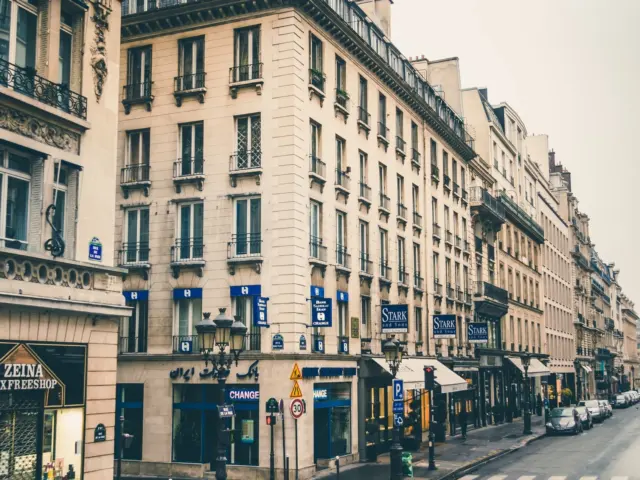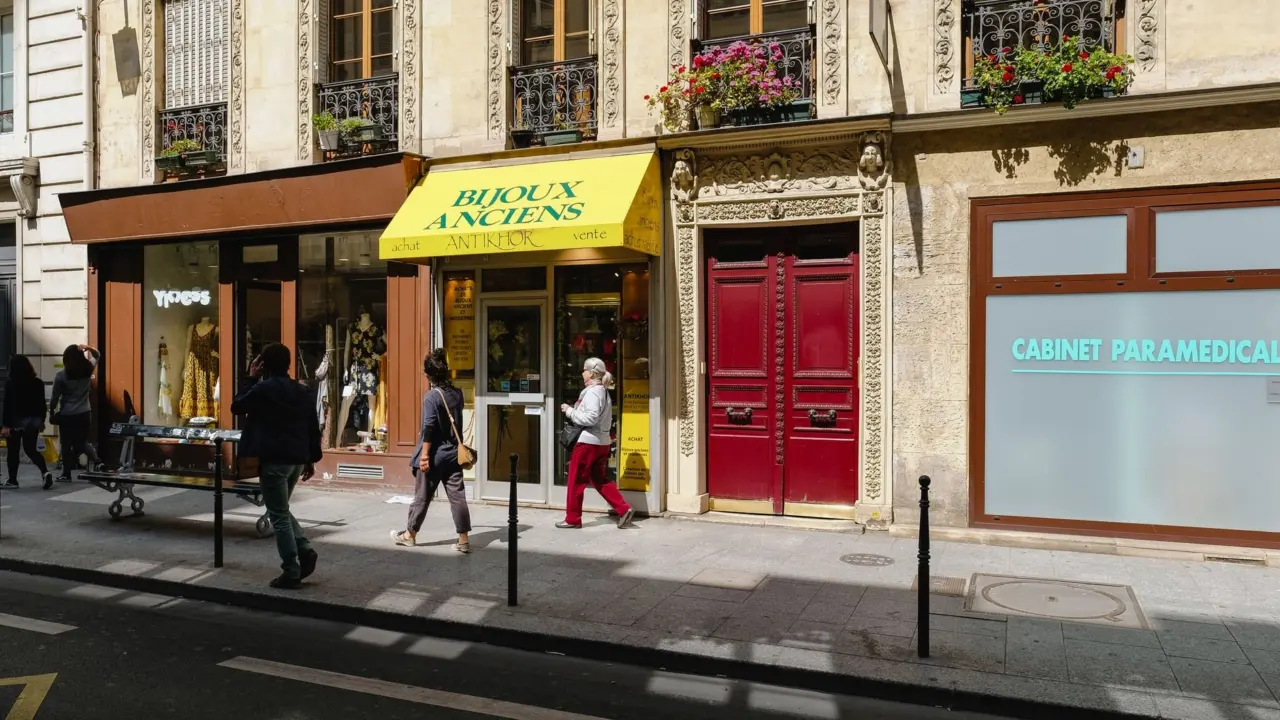
Parisian designer fashion shopping starts with one choice: department store, luxury street or independent boutique. Pick department stores for range, Avenue Montaigne and Rue du Faubourg Saint-Honoré for flagships, and the Haut Marais for smaller labels.
This guide sorts the city by store type, then walks through the purchase steps. If you want a curated shortlist, start with the best fashion boutiques in Paris. If you are shopping by name, the Parisian fashion designers list is the better entry point.
Choosing your starting point
The easiest way to plan is to match the district to the kind of purchase you have in mind. Paris designer shopping is spread across distinct areas, and each rewards a different approach. Matching the area to your goal saves more time than any amount of map-reading.
- You want range under one roof. A department store lets you compare several labels, shoes and accessories in a single visit. It suits first-time visitors and anyone who has not settled on a brand.
- You want the flagship of a famous house. The luxury streets of the 8th arrondissement and the Faubourg Saint-Honoré concentrate the big names. They suit shoppers who arrive with a short list, because wandering is less productive than going to specific doors.
- You want smaller labels and a browsing walk. The Haut Marais rewards slow, street-by-street exploring and suits shoppers who would rather find something less ubiquitous.
- You want fine jewelry or watches. Place Vendôme is the destination for the great jewelers, as Notes from Europe describes it, and it deserves its own visit rather than a stop squeezed between clothing stores.
- You are watching the final price. Two things change what you pay: whether you claim a tax-free refund, and whether the house you are buying from ever discounts. Both are covered below.
A practical rule follows from this. Treat each district as its own outing and decide before you leave the hotel whether you are browsing or buying. Browsing days suit department stores and the Haut Marais. Buying days suit a flagship visit with a passport in your bag. If you are buying an expensive piece from a house that holds its prices, there is little reason to wait. If the brand does discount, timing matters, and the section on sales explains how to think about it.
Department stores for range and comparison
A Paris department store gathers designer clothing, shoes and accessories in one building. That makes it the lowest-risk starting point if you do not know which brands or styles you prefer. You can try several labels in a single visit and then decide which deserve a trip to a standalone boutique. Store hours and floor layouts change, so confirm current opening hours on each store’s official site before building a route around it.
Galeries Lafayette Haussmann
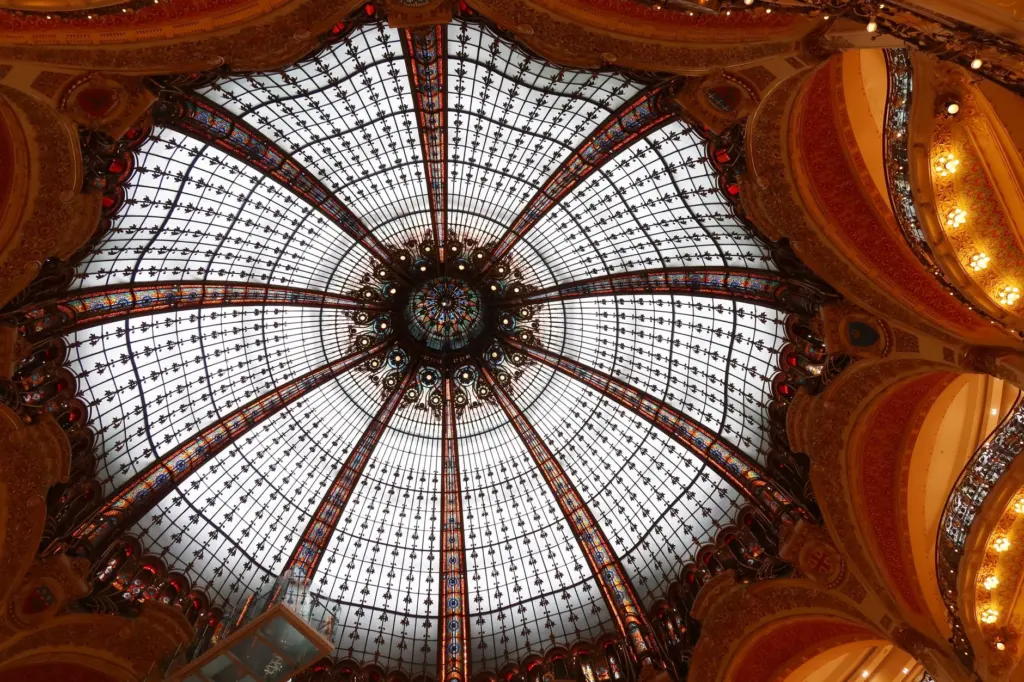
The original Galeries Lafayette store opened in 1894 at 40 Boulevard Haussmann and has expanded over the decades, according to Petite Suitcase. Its Art Nouveau stained glass dome is a reason to visit even if you are not buying. The store suits shoppers who want breadth and a sense of occasion, and who are happy to spend time moving between floors. If you are short of time, go with a list of labels so the building’s scale works for you rather than against you.
Le Bon Marché
Petite Suitcase calls Le Bon Marché the oldest department store in Paris and describes it as filled with classic French brands, including a designer clothing and shoe department. It suits shoppers who lean toward established French names and want to browse designer pieces and footwear in the same building. If your plan is to compare a classic house against newer labels, pair a visit here with a day in the Haut Marais.
La Samaritaine
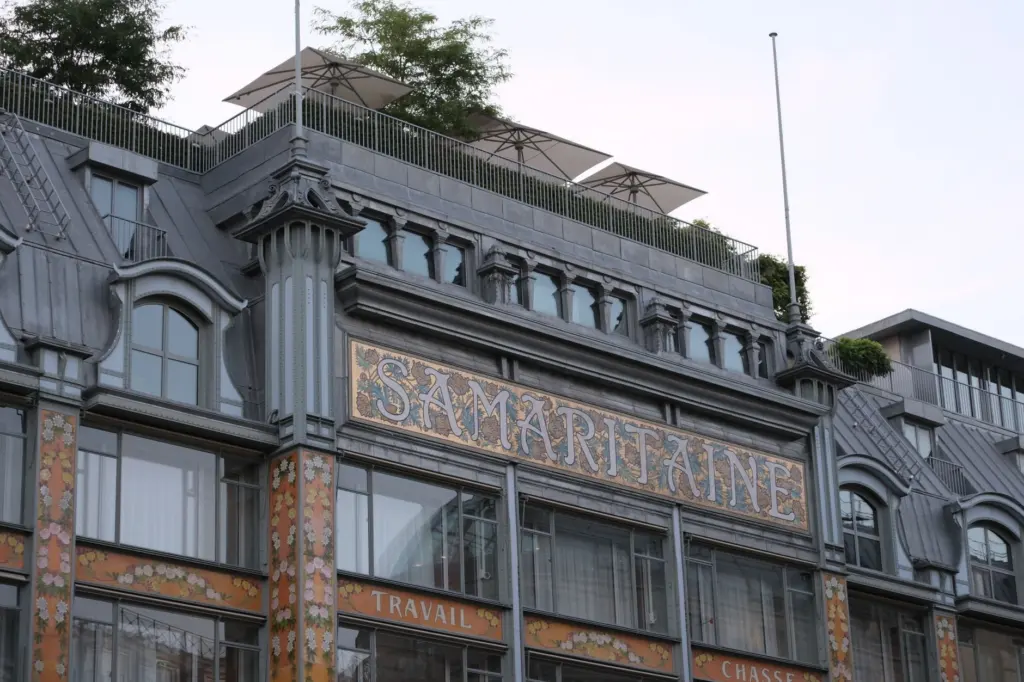
La Samaritaine reopened after renovation and is at 9 Rue de la Monnaie. It makes a useful third department store option when you want to compare how different stores present their designer floors. Because its reopening is recent, it suits repeat visitors who have already done the better-known stores.
Choosing between the three
Pick Galeries Lafayette Haussmann when you want maximum range and a landmark interior. Pick Le Bon Marché when classic French brands and a dedicated shoe department matter most. Pick La Samaritaine when you have already seen the others, or want to compare a newly reopened store. None of these replaces a boutique visit for a specific house, but each helps you narrow what you actually want before you commit to a flagship.
Avenue Montaigne, Rue Saint-Honoré and the Golden Triangle
The luxury core of Paris sits in the 8th arrondissement, and it is where most shoppers will find the flagships of the best-known houses. Notes from Europe describes the Triangle d’Or as bordered by the Avenue des Champs-Élysées, Avenue Montaigne and Avenue George V. The area rewards a plan: arrive with named houses, and the district becomes a sequence of short walks rather than a long search.
Avenue Montaigne
Avenue Montaigne is a smaller, more intimate street than the grand avenues around it, and it holds houses such as Dior, Celine and Brunello Cucinelli. It suits shoppers who want a contained visit with several major names close together. Because the street is compact, it works well as a morning or afternoon block on its own.
Rue du Faubourg Saint-Honoré
Rue du Faubourg Saint-Honoré features similar luxury boutiques, including Prada, Bottega Veneta and the Hermès flagship. Shoppers who think of this as Rue Saint-Honoré territory should plan it as a counterpart to Avenue Montaigne rather than a continuation, since the two streets together make a full day for a committed luxury shopper. Choose one of them if your time is limited, and pick the street whose houses match your list.
Place Vendôme
Place Vendôme in the 1st arrondissement is the destination for Cartier, Van Cleef & Arpels and Patek Philippe. It is a jewelry and watch stop, and it makes more sense as a separate visit than as an add-on to a clothing route.
Haute couture showrooms
The same district also contains haute couture showrooms, where made-to-order fashions are previewed for clients. Because haute couture is made to order, those showrooms are not stock racks for browsing. Visitors who want ready-to-wear should focus on the flagship boutiques and the department stores instead.
Le Marais and independent boutiques
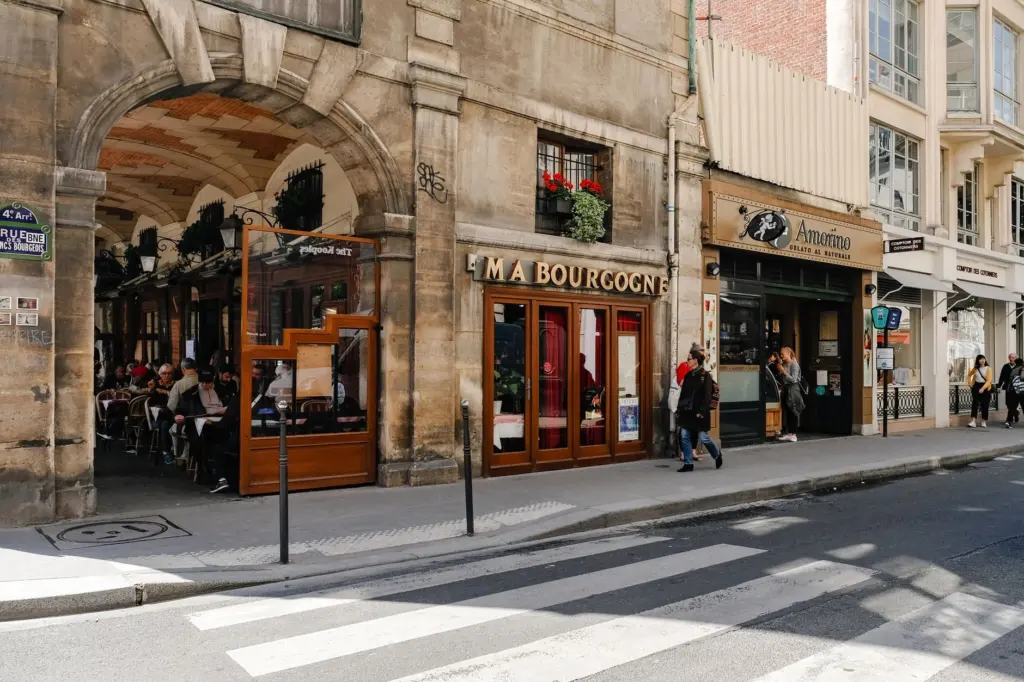
The Haut Marais, the upper part of Le Marais in the 3rd arrondissement, is the strongest choice for independent boutiques, according to Paris++. It suits shoppers who like to browse on foot, compare several small shops and leave with something less obvious than a flagship logo. It also pairs well with the department stores: use the large stores to learn what you like, then use the Marais to find it in a smaller setting.
Two addresses are worth knowing. Paris++ names the Oska shop at 133 rue Vieille du Temple as a first stop, and it points to the only Parisian branch of the much-coveted Pas de Calais at 15 rue de Poitou. A single-branch shop is a good reminder that some of the most interesting pieces in Paris are not available in a chain of identical stores.
Allow more time here than the map suggests. Independent boutiques have smaller stock, so a piece you like may not come back in another size. Decide quickly on items that fit well, and keep your passport with you so that any tax-free paperwork can be started at the till.
Emerging labels versus established houses
The most reliable signals that a label is an established house are its heritage and its retail footprint. A house with a long timeline and a flagship on a luxury street is established, whereas a label stocked mainly by smaller shops is more likely to be emerging. These are guides, not rules, but they help you decide where to shop.
- Heritage. Established names have a documented history. As La Flore Paris notes, Paul Poiret opened his own fashion house in 1903 and Chanel opened her first shop in Paris in 1910. A label with that kind of timeline sits in a different category from a designer whose name you met last season.
- Growth into a shop of one’s own. Christian Louboutin eventually opened his own shop in Paris in the 1990s, the same source says, which shows how a name can grow from a specialism into a full house.
- Address pattern. Flagships on Avenue Montaigne or Rue du Faubourg Saint-Honoré point to a global house. A shop with only a single Paris address, such as Pas de Calais on rue de Poitou, points to a smaller footprint.
If a particular name is on your list, use the labelled guides to see where each fits before you plan a visit: Damir Doma clothing, Alexandre Vauthier clothing, the Andrew Gn designer guide and the Christine Phung designer guide. They help you decide whether a label is worth a dedicated stop or a quick browse in a multi-label shop.
Tax-free shopping and the purchase itself
Visitors can reclaim part of the VAT on designer purchases, but the refund is partial and the paperwork starts at the till. Notes from Europe gives France’s standard VAT as 20% and says the refund is not the entire amount of VAT, though it is still a substantial sum. Treat the refund as a reduction in your final cost, not a discount on the shelf price.
The process is straightforward if you prepare for it. Paris++ advises asking for your De-Taxe (Tax Free refund) form at the cash register and processing it at the final departure point from the EU. Petite Suitcase adds that you should bring your passport and collect your VAT refund paperwork at each store. Use these steps as a checklist:
- Carry your passport on every shopping day, since each store needs it to prepare the paperwork.
- Ask for the De-Taxe form at the cash register before you pay, and ask what minimum purchase the store applies, as the threshold is set at the register.
- Check that the item, receipt and form match before you leave the shop.
- Keep every form together and plan to process them at your final departure point from the EU.
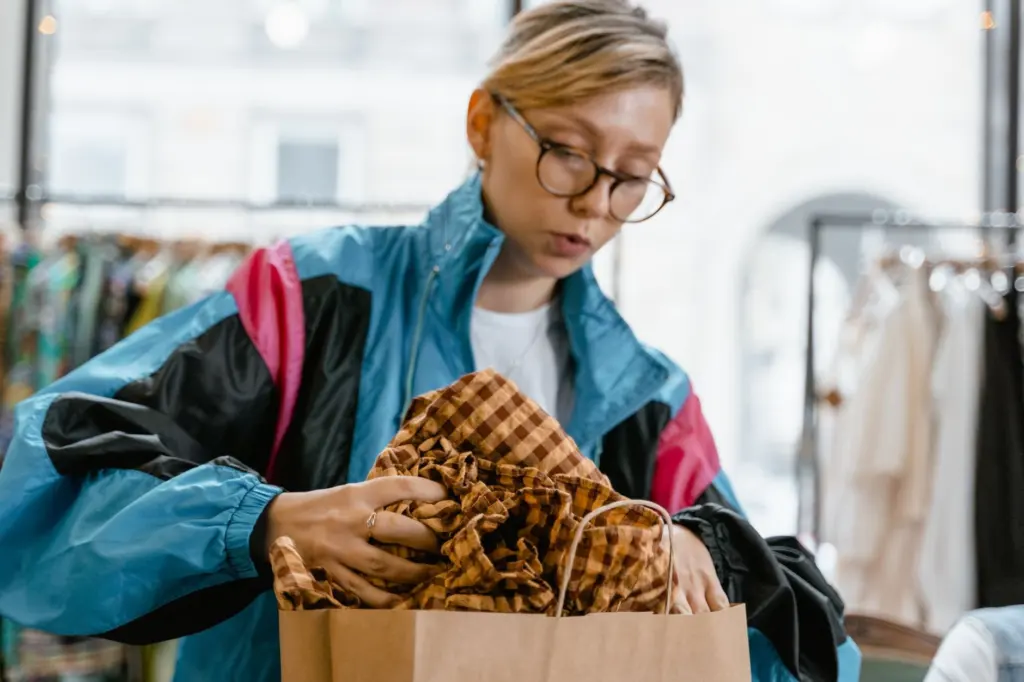
For a fuller walk-through of the buying process, see the guide on how to shop designer clothes in Paris.
Sales and discounts
Whether to wait for a sale depends on the house. According to Notes from Europe, luxury brands such as Louis Vuitton, Hermès and Chanel never discount or go on sale, while designer brands such as YSL, Chloé and Balenciaga do go on sale. That split should shape your plan.
- Buying from a house that never discounts. There is no reward for waiting, so buy when you find the piece you want and rely on the tax-free refund to reduce the final cost.
- Buying from a house that does go on sale. If your timing is flexible, consult the Paris soldes dates before committing to a full-price purchase.
- Looking for a bargain on a specific piece. Paris sample sales offer a different route, and they suit shoppers who are flexible about sizes and styles.
Discount depth varies by brand and season, so check each label’s own announcement rather than assuming a standard percentage. A discounted piece is also still eligible for the refund process described above, which is worth asking about at the till.
What to buy and where to look
Once you know the district, match it to the kind of piece you want. Dresses and jackets are the easiest categories to compare across stores, because every department store and most boutiques carry them. If tailoring and outerwear are your priority, see the guide to French designer jackets. If you are buying for an occasion, the guide to French designer dresses compares what to look for.
Jewelry deserves a separate plan. Place Vendôme is the place for the great names, but smaller designers are worth seeking out too. The Lara Bohinc jewelry guide covers one designer, and the guide to designer statement rings helps you choose between a single bold piece and a stack.
Not everything has to be new. Resale is a legitimate route to a designer piece at a lower price, and the guide to the best vintage shops in Paris covers it. If you prefer to buy from home, see where to buy French designer clothes online. Brand sites set their own delivery terms: FRNCH offers free delivery on orders over 120 euros in France and Belgium, and a newsletter offer of 10 euros off a first order when you spend 60 euros or more. Check the destination and threshold before you add items to a basket, because terms differ by brand and country.
If you want to keep following new guides, the signup page explains how to join.
Districts at a glance
| District | Best for | Planning use |
|---|---|---|
| Golden Triangle and Avenue Montaigne (8th arrondissement) | Dior, Celine, Brunello Cucinelli; haute couture showrooms | Go with a named list of houses for a contained, flagship-focused visit |
| Rue du Faubourg Saint-Honoré | Prada, Bottega Veneta, Hermès flagship | Pair with Avenue Montaigne or give it its own block |
| Place Vendôme (1st arrondissement) | Cartier, Van Cleef & Arpels, Patek Philippe | Treat as a jewelry and watch visit, separate from clothing |
| Haut Marais (3rd arrondissement) | Independent boutiques such as Oska and Pas de Calais | Allow slow browsing time and keep a passport ready for tax-free forms |
District details come from Notes from Europe and Paris++.
Frequently asked questions
Can you tour Galeries Lafayette Haussmann?
Yes. Petite Suitcase says a guided tour runs year round on Sundays before the store opens, and an English-language tour is offered on Sundays.
Which refund service do Paris luxury brands recommend?
Most luxury brands in Paris recommend Global Blue for processing a VAT refund, according to Notes from Europe. Ask the store at the register which route it uses.
Where should you begin in the Haut Marais?
Paris++ starts from the small crossroads where rue de Bretagne, rue Vieille du Temple and rue de Turenne meet, then explores outward on foot.
When did La Samaritaine reopen?
La Samaritaine first opened in 1870 and reopened in 2021 after renovation, according to Petite Suitcase.