
The main types of earrings are studs, hoops, huggies, drops, chandeliers and statement pieces, sorted by how far they hang from the lobe. The fastening then decides how securely each one stays on.
This guide sits within the fashion accessories guide and works through earrings in the order that shapes the choice: length and shape, then fastening, then face shape and outfit.
How earring types are sorted
Earrings are grouped by silhouette, and the main dividing line is whether the piece stays at the lobe or hangs below it. That one distinction separates studs and huggies from drops, dangles and chandeliers. Hoops are defined by their circular form, and statement earrings are defined by the attention they draw rather than by a fixed shape.
| Type | Defining shape | Planning use |
|---|---|---|
| Stud | Small, simple, does not hang past the earlobe | The quietest option, for when the ear should not compete with the outfit |
| Hoop | Small or large circles or semi-circles | Reads as delicate or striking depending on size |
| Huggie | The smallest hoops, hinged with a latch | Stud-like wear that can go in lobe or cartilage piercings |
| Drop | A pearl, gem or ornament hanging a little below the lobe | A step up from a stud with modest movement |
| Dangle | Flows from the bottom of the lobe and moves with you | Lengths range from a centimeter or two to shoulder length |
| Chandelier | Several tiers of gemstones, crystals or beads | A dressed-up piece that can carry the whole look |
| Statement | Large or bold designs that call attention to themselves | The effect comes from colour, texture or size |
Definitions come from the earring and earring-back guide and the all-kinds-of-earrings guide. The sections below take the types in order from closest to the ear to furthest from it.
Stud earrings
Stud earrings are small, usually simple, and do not hang past the earlobe. Because they sit directly on the lobe, they give the impression of floating on the ear. That makes them the sensible pick when the rest of the outfit, a necklace or a patterned top is already doing the talking.
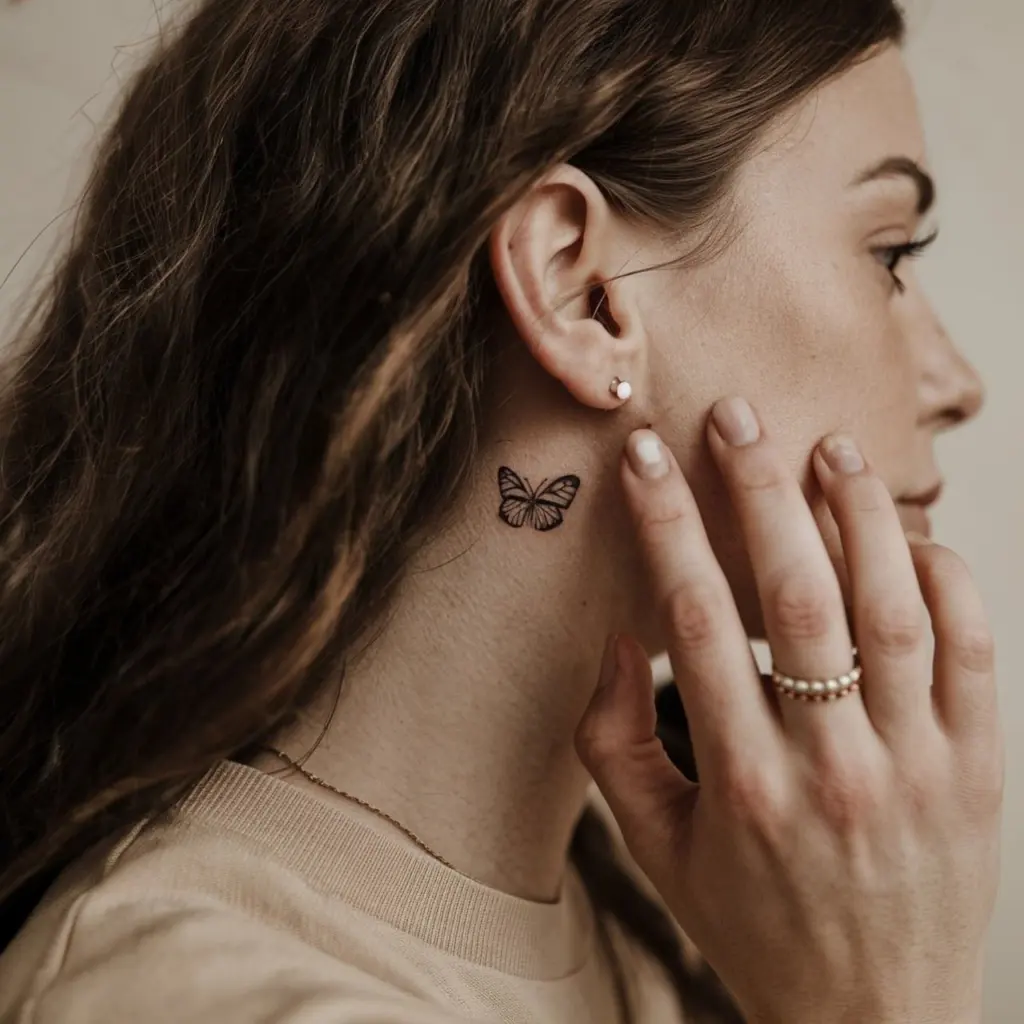
Studs usually close with a post and a friction back, covered in the fastening section below.
Hoops and huggies
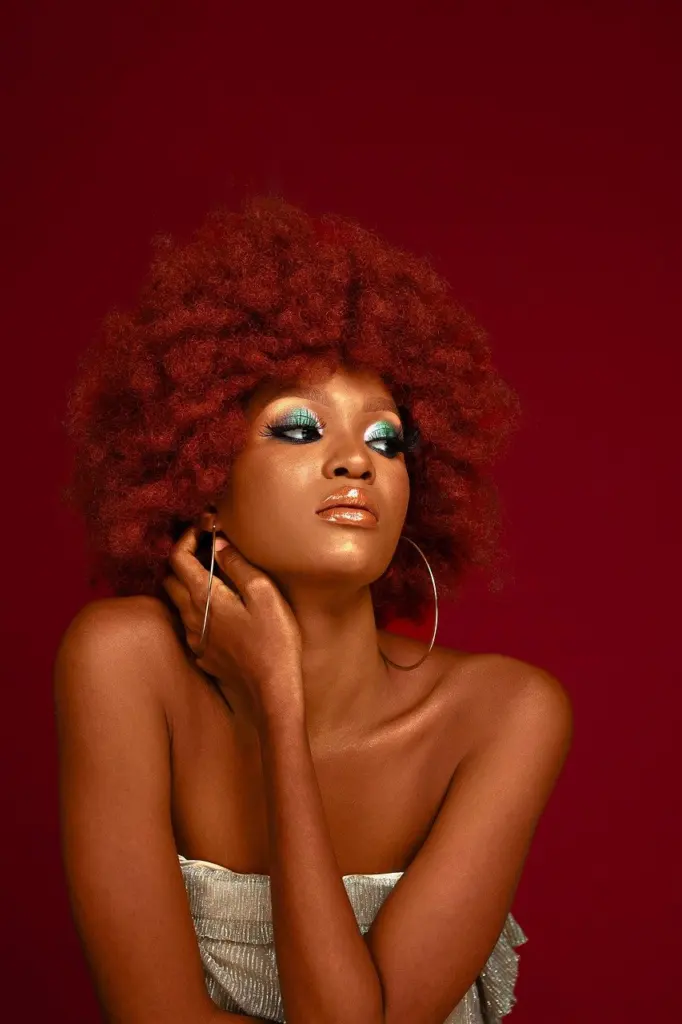
Hoop earrings are small or large circles or semi-circles that can look either delicate or striking. Size does most of the styling work: a thin small hoop behaves like a refined accent, while a large polished one becomes the focal point. Hinged hoops form a complete circle and fasten from the back of the earring.

Huggies versus small hoops
Huggies are the smallest hoops in the range, so every huggie is a hoop but not every small hoop is a huggie. What sets them apart is construction and wear. Huggies are hinged at the bottom to open wide and click onto the ear with a secure latch, and they are described as simple and versatile, similar to a stud. A small hoop of another construction, such as a J hoop, is a different build. Choose huggies when you want stud-level subtlety with a bit of ring shape.
Drop earrings
Drop earrings have a pearl, gem or other ornament that hangs a little lower than the earlobe. They are the middle ground between a stud and a long dangle. They add movement and a vertical line without much length, so they suit anyone who finds studs too plain but a long earring too much.
Chandelier earrings and what to wear them with
Chandelier earrings are built from several tiers of gemstones, crystals or beads. The same guide says they are best for a night out, and that the style makes a splash on its own, so the earrings may be your only jewelry accessory.
In practice that means pairing them with an outfit that leaves room for them. Keep necklaces and bracelets minimal or leave them off, and let the earrings be the single decorative element. If rings are part of your look, how to stack rings shows how to build one focal point on the hands without clashing.
Statement earrings
Statement earrings are designed to call attention to themselves and are usually large or bold. The stop-and-stare effect can come from colour, texture, size, or all three.
Wearing them without overdoing it
Use one of those levers at a time. A big but plain silver hoop, or a small but vividly coloured earring, is easier to carry than a large, colourful, heavily textured piece. Then simplify everything else: the earring guide notes that mismatched jewelry adds extra emphasis to whichever earrings you wear, so other pieces should be kept simple.
Earring fastenings
The fastening decides comfort, security and how much weight an earring can sensibly carry. These are the standard types:
- Friction back: slides onto the back of an earring post and holds by friction.
- Butterfly back: a type of friction back with two small loops, like butterfly wings.
- Screw back: twists to tighten onto a threaded post, which makes it a firmer hold than a plain slide-on back.
- Leverback: hooks through the piercing and fastens by pushing the lever at the base of the earring closed. It is described as the best choice for heavy earrings.
- Clip-on: snaps to the lobe, but tends to slip off fairly easily when dangles are too heavy.
As a rule, match the fastening to the weight: friction and butterfly backs for studs, leverbacks for longer or heavier pieces, and lighter designs where clip-ons are the only option. When you are not wearing a pair, how to store jewelry covers keeping fastenings and delicate pieces in good order.
Choosing earrings for your face shape
The common face-shape advice works on contrast: choose earring shapes that balance or soften the features you want to offset. Treat it as a starting point rather than a rule.
- Round faces: long, dangly earrings lengthen the face, and any hoops should be oval or oblong rather than round.
- Heart-shaped faces: earrings that are long and heavier toward the end add dimension to a narrow chin, and large hoops widen it.
- Square faces: round earrings soften the jawline and look best with angular features.
Frequently asked questions
Are drop and dangle earrings the same thing?
No, though they are often confused. Drops hang just beneath the lobe, while dangles flow from the bottom of the lobe, move as you move, and can reach all the way down to the shoulders.
What is a J hoop?
A J hoop forms a partial hoop shaped like the letter J. It has no hinge, which separates it from hinged hoops that close into a full circle.
Can huggies be worn in cartilage piercings?
Yes. Huggies are used in non-traditional cartilage piercings as well as standard lobe piercings.
Which face shape suits almost any earring?
Oval faces look great with nearly every type of earring, so the shape-matching advice matters least there.