Facing a rack of belts, sort the types of belts by material and fastening: leather for everyday and smart wear, canvas and webbing for casual, braided for relaxed, chain and statement belts for decoration.
This catalogue sits inside the wider fashion accessories guide. It groups belts by material, shape and use, then covers the buckles that fasten them. Chain belts and statement belts are decorative rather than structural, so they get their own section.
Belt types at a glance
The table compares the everyday structural belts. Width is the clearest dividing line between smart and casual, and the fitting, such as a buckle or ring, usually tells you the intended use.
| Belt type | Defining feature | Formality and width | Planning use |
|---|---|---|---|
| Classic leather belt | Leather strap with a metal buckle | Usually 1.25 to 1.5 inches wide, with smarter ones at the narrower end | The all-round choice; go narrower as the outfit gets smarter |
| Formal belt | Thin strap | Usually 1 to 1½ inches wide | For tailoring and dressy trousers |
| Canvas belt | Utilitarian, often with a box-frame buckle | Casual; useful and subtle | Practical everyday wear where leather feels too polished |
| Webbing belt | Usually paired with O-rings or D-rings | Casual | Adjustable and hole-free; suits relaxed outfits |
| Braided belt | Woven strap | Casual; not for a suit | A relaxed alternative to a plain leather strap |
Widths come from PermanentStyle’s belt capsule guide and Watch Warehouse’s guide to belt styles, which also describe the canvas, webbing and braided styles.
Leather belts
Leather is the default belt material. Watch Warehouse notes that most belts are made from cowhide leather, which is why a plain leather strap is the reference point for every other type.
Exotic leathers are the exception. They come from the hide of animals besides cows, such as alligator, crocodile or ostrich. Choose one when the material itself is meant to be noticed, and stay with cowhide for a belt that should simply do its job.
Waist belts and width
A waist belt is the standard belt type. Its strap is, in Watch Warehouse’s words, the band of material that fits around the waist, and a buckle joins the ends.
Trouser belts
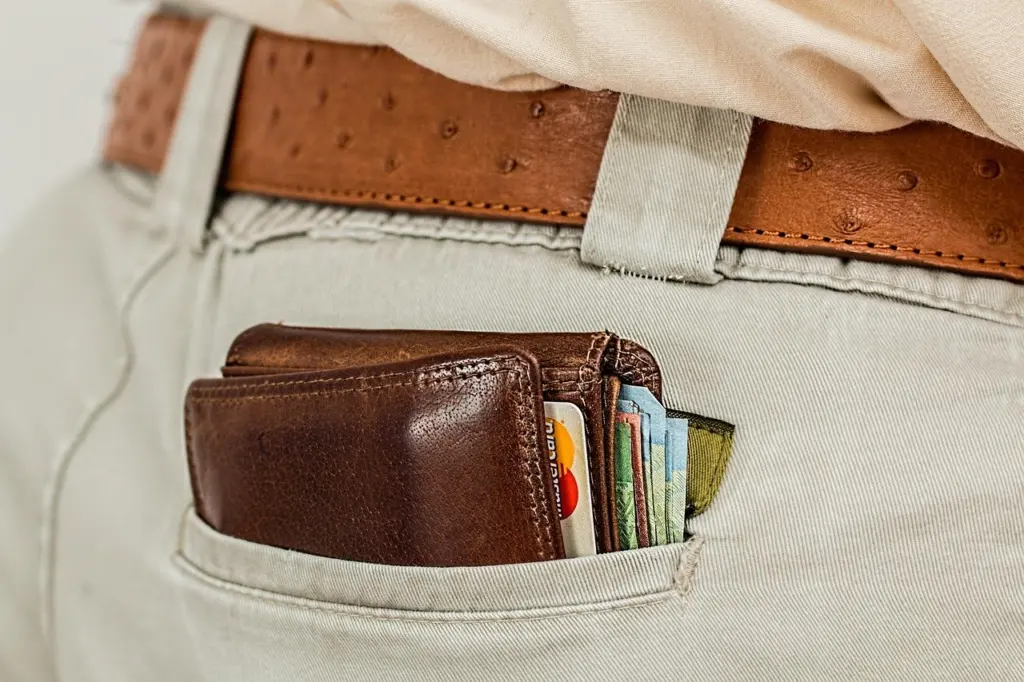
For trousers, the supported range is clear. PermanentStyle puts classic belts at 1.25 to 1.5 inches, with smarter ones at the narrower end of that range. Watch Warehouse says formal belts are thin, usually 1 to 1½ inches wide. A narrower belt also suits tailoring and jeans, so it is a safe choice across both.

Dress belts
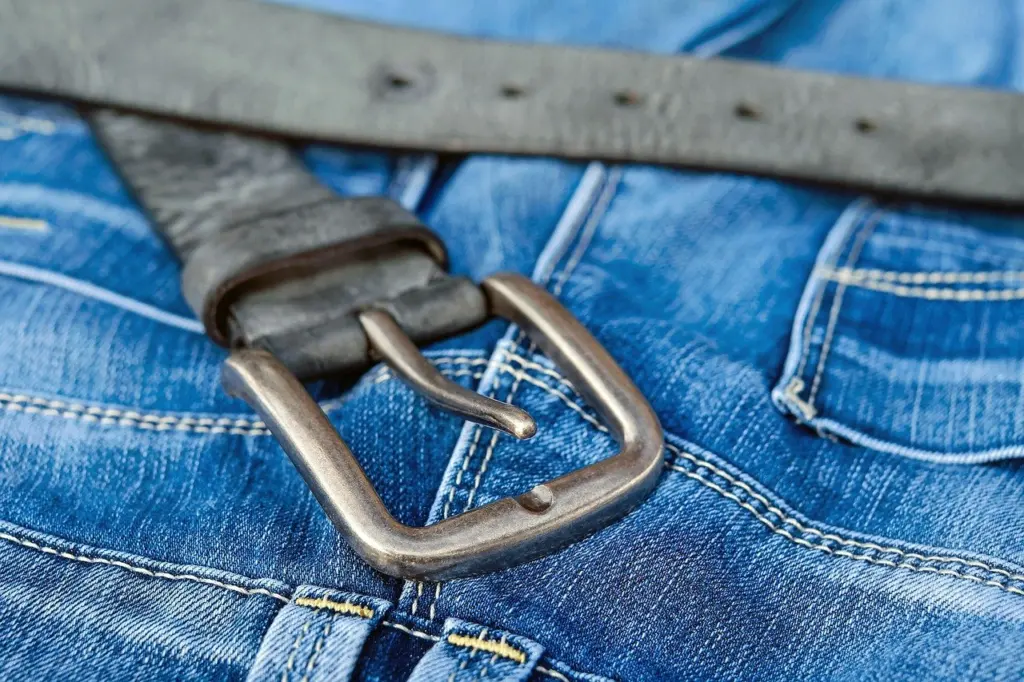
No standard width comes with dress belts the way it does for trouser belts, so width is a matter of proportion rather than rule. The buckle matters here too, since buckles look more casual as they get bigger and thicker. A small, plain buckle keeps a belt looking dressy over fabric that drapes.

Canvas, webbing and fabric belts
These belts trade polish for practicality. Canvas straps are utilitarian and commonly found in military settings, usually paired with box-frame buckles, according to Watch Warehouse. PermanentStyle calls a canvas belt useful and subtle, with functional aspects some people like.
Webbing belts are a close relative. They are usually paired with O-rings or D-rings instead of a prong buckle. Weekly Lux Drop describes fabric belts generally as any belt made from fabric, usually PVC canvas, and lighter than leather. Pick this group when you want a light, casual belt and do not need it to look formal.
Braided belts
Braided belts are woven straps, and their reputation is firmly casual. Watch Warehouse advises that braided belts are on the casual side and should not be paired with a suit.
PermanentStyle adds a caveat: braided leathers are a nice casual option but can look a little old-mannish in some contexts. They suit anyone who wants texture in a relaxed outfit, and they are the wrong pick for dressy settings.
Chain and statement belts
Chain belts are made out of chain links, per Weekly Lux Drop, and close with a lobster claw or a buckle. The metal links are the design, which makes them a decorative accent rather than a utility belt.
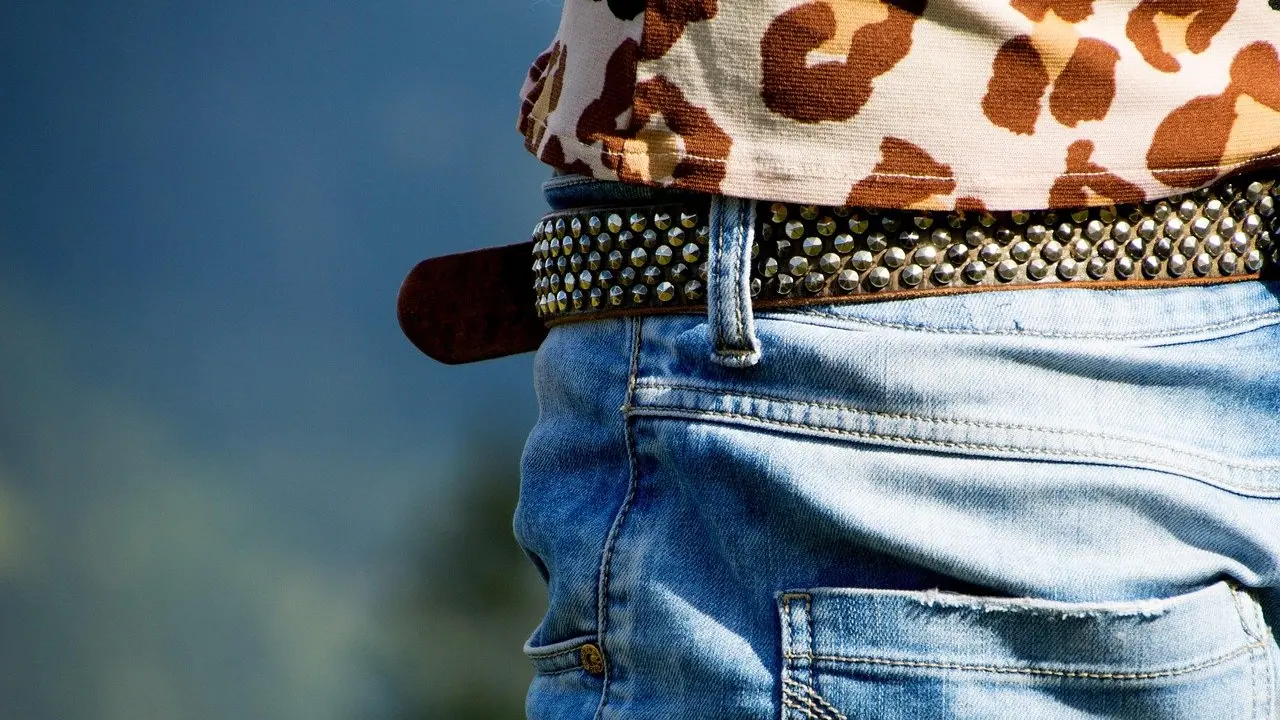
The same source defines a statement belt, also called a fashion belt, by its decorative hardware on the front. Statement belts suit someone who wants the buckle or plate to be the focal point. Because larger, thicker buckles read as more casual, they sit at the relaxed end of the range. For the wider accessory family, the types of scarves follow the same material-first logic.
Buckle types and metals
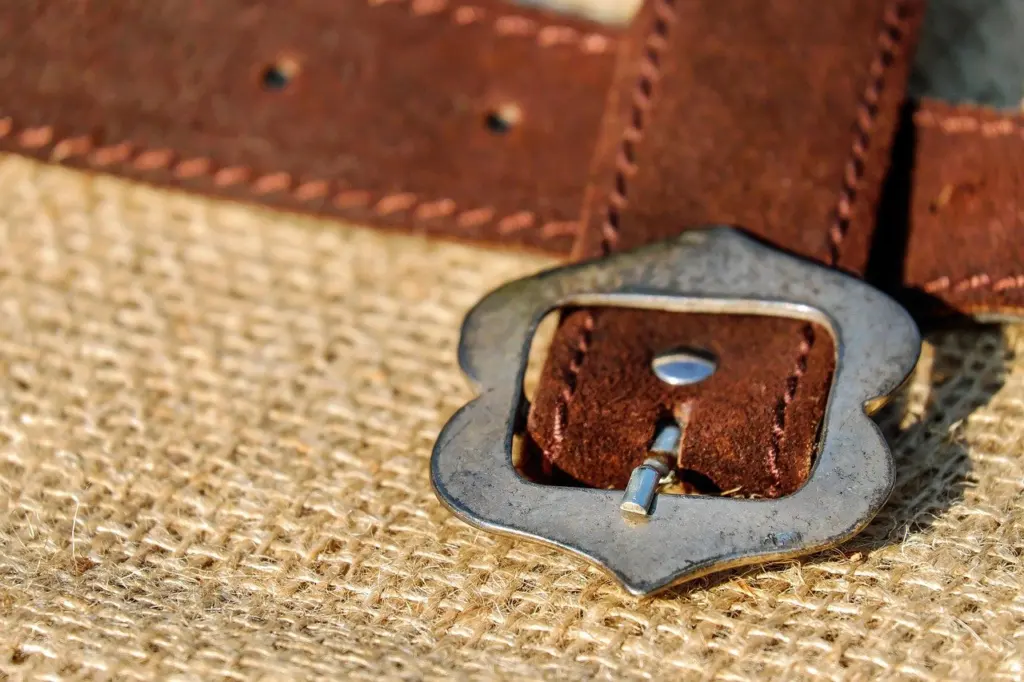
The buckle is the metal clasp that connects the two ends of the strap, as Watch Warehouse puts it. A belt’s character depends heavily on which style it uses.
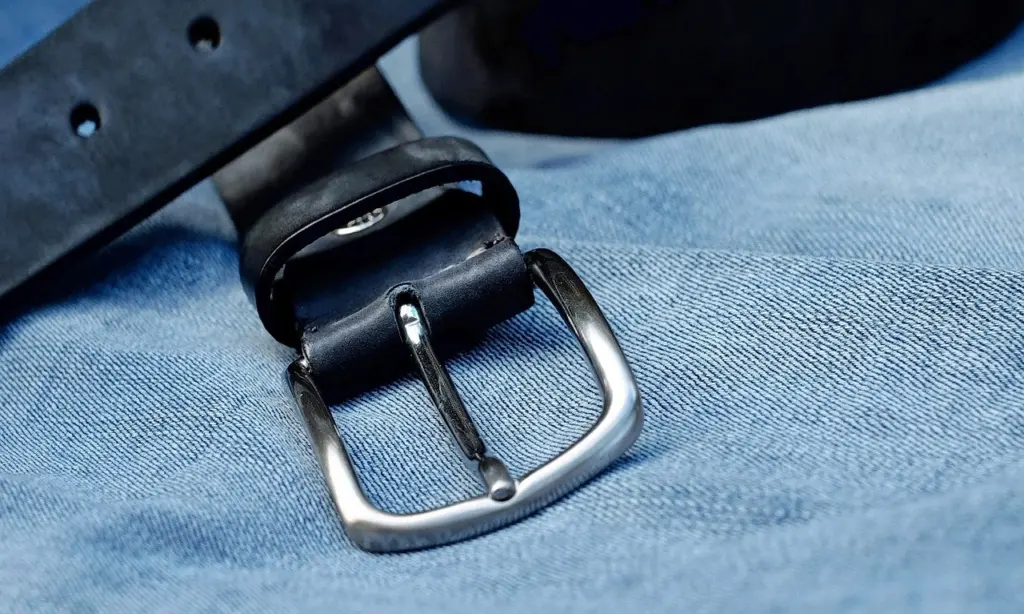
- Heel bar buckle: the standard for dress belts, according to Groove Life.
- Box-frame buckle: a clamping mechanism holds the strap in place, so no holes are required. It is the usual partner for canvas straps.
- Stitched buckle: the buckle is permanently sewn into the leather with heavy-duty thread, so it cannot be swapped.
- Prong, or tongue: the small pin that goes through the strap to fasten a conventional buckle.
Metal matters as much as shape. Groove Life calls solid brass the gold standard for pretty much every traditional buckle, and says zinc alloy is brittle and does not fare as well for long-term use. If a belt is meant to last, check what the buckle is made from, not just the strap.
Decision checklist
- Set the dress code first. Suits and tailoring call for a thin leather belt with a heel bar buckle. Braided and canvas belts belong with casual clothes.
- Match width to the occasion. Stay within the narrower end of the classic range for smart outfits, and widen only for relaxed ones.
- Judge the buckle’s size. The bigger and thicker it is, the more casual the belt looks.
- Check the metal. Choose brass over zinc alloy for a belt you plan to keep.
- Add decoration last. Chain and statement belts work as the finishing accent; the guide on how to accessorize an outfit covers pairing them with the rest of what you wear.
Frequently asked questions
How is a belt’s size measured?
Belts are sized by waist measure, which Trendhim describes as the distance from the tip of the belt buckle to the centre hole.
What does full-grain leather mean on a belt?
Full-grain leather is the outer part of the hide and the opposite of split leather, according to Trendhim, which treats it as the higher-quality option.
Are one-inch belts a current style?
Yes. PermanentStyle says one-inch belts have become popular in recent years, and quite a few newer brands offer the width.